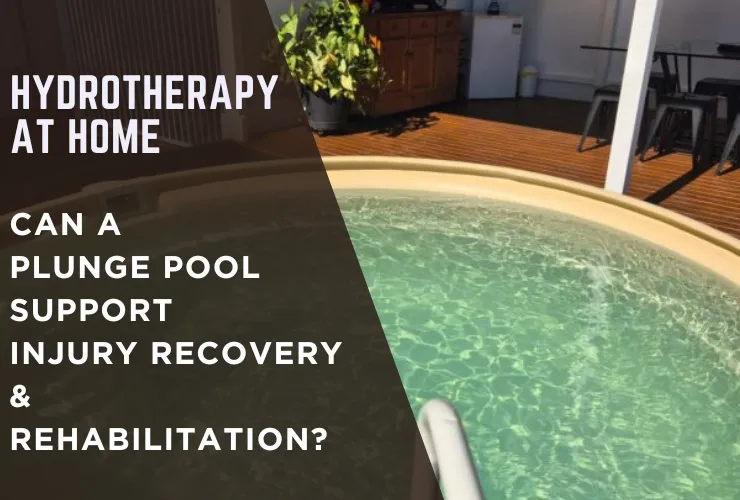
Hydrotherapy at Home: Can a Plunge Pool Support Injury Recovery & Rehabilitation?
Across physiotherapy clinics, sports training centres, and rehabilitation hospitals, one therapy has been used for decades to help people recover from injuries and improve mobility: hydrotherapy — the therapeutic use of water for exercise and rehabilitation.
But in recent years something interesting has started happening outside clinical settings. Homeowners are beginning to explore whether smaller backyard pools — especially plunge pools — can support gentle rehabilitation, athlete recovery, and low-impact movement at home.
While a backyard plunge pool is not a medical device, the same water properties used in clinical hydrotherapy pools — buoyancy, resistance, and hydrostatic pressure — can create an environment that supports low-impact exercise and recovery when used alongside professional advice.
Let’s explore why.
What Is Hydrotherapy?
Hydrotherapy (sometimes called aquatic therapy) is a physiotherapy technique that uses water to assist movement, rehabilitation and exercise. The principle is simple: water changes how the body experiences gravity and resistance.
Because of buoyancy, water reduces the load placed on joints and muscles during movement. Research shows that performing exercises in water can reduce joint forces compared with land-based activity while still activating muscles and providing resistance.
This is why hydrotherapy is widely used for people recovering from:
sports injuries
joint replacement surgery
arthritis
back pain
neurological rehabilitation
mobility decline with age
Why Water Is Such a Powerful Environment for Recovery
There are four unique physical properties of water that make it valuable for rehabilitation.
1. Buoyancy reduces stress on joints
When the body is immersed in water, buoyancy counteracts gravity and reduces body weight. Studies show that water immersion significantly decreases the load placed on weight-bearing joints during exercise.
Depending on water depth, this effect can be dramatic. At neck depth, the body may experience up to 90 % reduction in weight bearing, allowing movement that would otherwise be difficult on land. For someone recovering from injury or dealing with joint pain, that difference can make exercise possible again.
2. Natural resistance strengthens muscles
Water is approximately 800 times denser than air, which means every movement encounters gentle resistance. This resistance helps strengthen muscles without the need for heavy weights or impact forces. Aquatic therapy research shows this resistance can increase muscle activation while still maintaining a low-impact environment for joints.
The result is a unique form of exercise: strength training that remains joint-friendly.
3. Hydrostatic pressure supports circulation
Water also exerts pressure on the body when immersed. This hydrostatic pressure can help circulation and reduce swelling in some situations. Combined with movement, this pressure can encourage fluid movement through tissues and support recovery processes.
4. Temperature can influence recovery
Warm water helps relax muscles and reduce stiffness, which is why hydrotherapy pools in physiotherapy clinics are often heated.
Cold immersion, sometimes called a cold plunge, has also become popular in athlete recovery programs. Research suggests cold water immersion may help reduce muscle soreness and fatigue after intense exercise.
However, experts emphasise that cold immersion should complement — not replace — proper rehabilitation and medical care.
Why Plunge Pools Can Work Well for Home Hydrotherapy
Traditional hydrotherapy pools are often large clinical installations, but many of the same benefits can be achieved in smaller spaces. In fact, plunge pools may offer several advantages for home-based recovery.
Compact size encourages consistent use
Large swimming pools can feel intimidating for someone recovering from injury. A plunge pool offers a more manageable environment — ideal for gentle movement, water walking, stretching or controlled exercises. And because consistency is critical in rehabilitation, an easy plunge pool just steps from your back door makes regular use far more likely.
Plunge Pool Depth is ideal for many aquatic exercises
Many hydrotherapy exercises are performed in waist-to-chest-deep water, which provides enough buoyancy to reduce joint load while still allowing controlled movement.
This depth range aligns well with many plunge pool designs, including the round plunge pool range offered by Aussie Plunge Pools, which provides comfortable immersion for a wide variety of water exercises.
Warm or cool water options
A plunge pool can be used in different ways depending on temperature preferences:
warm water for relaxation and gentle mobility work
cooler water for athlete recovery or post-exercise immersion
contrast therapy by alternating warm and cool exposure
This flexibility allows a single pool to serve multiple wellness purposes.
Athletes Are Embracing Recovery Pools
Hydrotherapy is not only for injury recovery — it’s also widely used by athletes.
Cold water immersion has become common in professional sport, where athletes use ice baths or cold plunges after intense training to help reduce muscle soreness and perceived fatigue. While the science is still evolving and results vary depending on context, many athletes report benefits in recovery routines.
This trend has helped popularise small recovery pools in homes, gyms and training centres.
Gentle Water Exercises You Can Do in a Plunge Pool
A plunge pool may support simple low-impact exercises that physiotherapists commonly use in aquatic therapy programs. Examples include:
Water walking
Walking through water increases resistance while reducing joint stress.Knee lifts
Standing in chest-deep water and lifting the knees can strengthen hip flexors and improve mobility.Leg swings
Gentle leg movements in water help improve joint range of motion.Floating stretches
Using the buoyancy of water to support slow stretching movements.
These exercises demonstrate how even a compact pool can support movement and mobility work. ****(Always consult a health professional before starting rehabilitation exercises.)
Why Round Plunge Pools Work Particularly Well
The round plunge pool design used by Aussie Plunge Pools offers practical advantages for rehabilitation-style use. Circular pools naturally provide:
consistent water depth around the perimeter
smooth movement paths for walking or exercises
equal access from all sides
efficient use of backyard space
Their size also allows easy entry and exit — an important consideration for people focusing on mobility and comfort.
In many cases, the round footprint integrates neatly into landscaped backyards while still delivering a highly functional water environment.
Creating a Backyard Recovery Space
A plunge pool used for wellness and recovery doesn’t need to feel clinical. With thoughtful design, it can become a beautiful outdoor sanctuary that supports both relaxation and movement. Simple ideas include:
timber or stone seating around the pool
privacy planting
handrails or steps for easier entry
shade structures for comfortable use
warm lighting for evening relaxation
This combination transforms a simple plunge pool into a personal wellness retreat at home.
A Pool That Supports Lifestyle and Wellbeing
For many homeowners, the appeal of a plunge pool starts with summer relaxation. But as hydrotherapy research and athlete recovery practices become more widely understood, people are realising that small pools can serve multiple purposes:
relaxation
entertaining
cooling down in summer
gentle exercise
mobility support
recovery routines
That versatility is one reason plunge pools are becoming increasingly popular across Australia.
The Important Disclaimer
While water exercise can support recovery and wellbeing, a backyard plunge pool should not be considered a replacement for professional physiotherapy or medical treatment. Anyone recovering from injury or managing a medical condition should always seek guidance from qualified healthcare professionals. However, when used responsibly and alongside expert advice, a plunge pool can provide a convenient environment for movement and relaxation.
A New Way to Think About Backyard Pools
For years, swimming pools were viewed mainly as leisure features. Today, many homeowners are seeing them differently. A thoughtfully designed plunge pool can become part of a broader wellness lifestyle — a place for recovery, relaxation and gentle movement. And with the right size, depth and layout, a plunge pool may offer exactly the kind of water environment that supports both health and lifestyle in one beautiful backyard feature.
