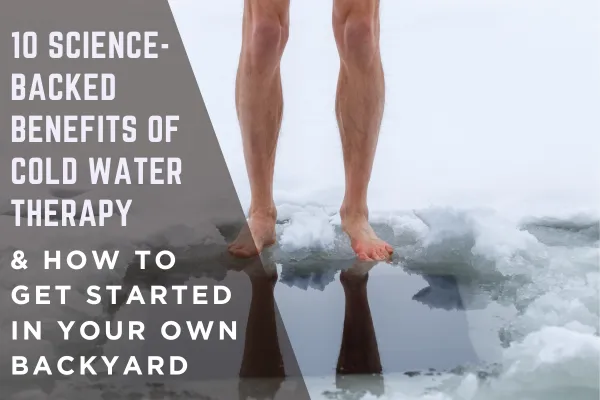
10 Science-Backed Benefits of Cold Water Therapy — And How to Get Started in Your Own Backyard
Cold water therapy has gone from a niche athletic recovery tool to one of the most talked-about wellness practices on the planet — and for good reason. From elite athletes and neuroscientists to everyday Aussies looking for a genuine edge on their health, more and more people are discovering what cold water immersion can do for the body and mind.
The good news for Australians is that getting started has never been more accessible. You don't need a fancy commercial cold plunge unit, a gym membership, or a bathtub full of ice. A plunge pool in your own backyard gives you everything you need — on your terms, whenever you want it.
Before we get to that, though, let's look at what the science actually says. Because the research behind cold water therapy is genuinely compelling.
What Is Cold Water Therapy?
Cold water therapy — also known as cold water immersion (CWI) or cold plunging — involves deliberately immersing your body in cold water, typically between 10°C and 15°C, for a short period of time. Sessions are usually between two and five minutes, though even shorter exposures produce measurable physiological responses.
The practice has roots going back thousands of years. Ancient Egyptians referenced cold therapy as far back as 3500 BC, and Greek physician Hippocrates was among the first to document its therapeutic uses. Today, researchers at institutions including the University of South Australia and Stanford University are building a growing body of evidence around its modern applications.
1. It Produces a Powerful Dopamine Boost
One of the most well-documented effects of cold water immersion is its impact on dopamine — the neurotransmitter most associated with motivation, pleasure, and a sense of wellbeing. Research has shown that cold exposure can increase dopamine levels by approximately 250% above baseline, with that elevation lasting for several hours after the session ends.
Why This Matters
Unlike the sharp dopamine spike and crash associated with stimulants or social media, the dopamine response from cold immersion is gradual and sustained. As a result, most people report a lasting sense of calm focus and motivation that carries through the rest of their day — not a brief buzz followed by a slump.
For anyone looking to improve their mood, sharpen their focus, or simply feel better on a day-to-day basis, that is a meaningful outcome from two to three minutes of cold water.
2. It Surges Norepinephrine — Your Brain's Focus Chemical
Alongside the dopamine response, cold water immersion triggers a dramatic release of norepinephrine — a neurotransmitter and hormone linked to alertness, attention, and cognitive performance. Research has recorded increases of up to 530% above baseline following cold immersion sessions.
The Mental Clarity Effect
Norepinephrine is what gives you that sharp, wide-awake feeling after a cold plunge. It's also involved in regulating mood, reducing pain perception, and sharpening concentration. Furthermore, this norepinephrine surge is one of the reasons cold water therapy is increasingly being studied as a potential tool for managing symptoms of depression and anxiety. The evidence in this area is still developing, but the early findings are genuinely promising.
3. It Reduces Inflammation
Cold water immersion has a well-established effect on the body's inflammatory response. Exposure to cold water causes blood vessels to constrict, which reduces blood flow to tissues and helps limit inflammation. Research shows that cold water immersion reduces pro-inflammatory markers — including IL-6 and TNF-alpha — while increasing anti-inflammatory IL-10.
What This Means for Everyday Life
Chronic low-grade inflammation is increasingly linked to a wide range of health concerns, from joint pain and fatigue to more serious long-term conditions. Cold water therapy offers a practical, drug-free way to help manage inflammation — particularly for people who are physically active or spend long hours on their feet.
4. It Accelerates Muscle Recovery
This is the benefit that first put cold water immersion on the mainstream map, and the research behind it is strong. A comprehensive systematic review found that cold water immersion reduces perceived muscle soreness and accelerates recovery from exercise-induced muscle damage — particularly in the 24 to 72 hours following intense physical activity.
Who Benefits Most
Weekend warriors, gym-goers, runners, cyclists, and tradies who spend long days doing physical work all stand to gain. Moreover, a 2025 network meta-analysis examining data from January 2000 to September 2024 confirmed that cold water immersion is one of the most effective recovery protocols available for acute muscle damage — superior to passive rest in reducing both soreness and recovery time.
5. It Improves Stress Resilience
Every time you step into cold water and choose to stay there despite your body's instinct to get out, you are training your nervous system. That might sound abstract, but the physiological reality is well-documented. Regular cold exposure improves the balance between the sympathetic nervous system (fight-or-flight) and the parasympathetic nervous system (rest-and-digest).
Building a Tougher Mind
Over time, this improved autonomic balance translates into better stress resilience in everyday life. Additionally, the act of practising deliberate control over your stress response in cold water — what neuroscientist Andrew Huberman describes as "top-down regulation" — appears to carry over into how you manage pressure, discomfort, and difficult situations outside the pool. In short, the cold teaches you to stay calm under fire.
6. It Supports Better Sleep
A University of South Australia systematic review and meta-analysis — one of the most comprehensive of its kind, analysing data from 11 studies involving 3,177 participants — found that cold water immersion can improve sleep quality. The mechanism is tied in part to the body's thermoregulation response after cold exposure.
The Temperature Drop Effect
After cold immersion, your body works to restore its core temperature. That warming and recovery process mirrors the natural drop in core body temperature that signals the brain it's time to sleep. As a result, an afternoon or early evening cold plunge can support deeper, more restorative sleep. It's worth noting, however, that cold immersion timed too close to bedtime may have the opposite effect — the norepinephrine surge can be stimulating. Mid-afternoon is the sweet spot for most people.
7. It May Boost Immune Function
Cold water therapy's effect on immune function is one of the more intriguing areas of current research, and the findings are noteworthy. The University of South Australia meta-analysis found that while immediate immune effects were not statistically significant, longer-term benefits were observed — including a 29% reduction in sickness absence among participants who took regular cold showers compared to those who didn't.
A Practical Immune Edge
That's a meaningful finding for anyone who spends time in high-contact environments, has kids in school, or simply can't afford to be run-down and out of action. Furthermore, regular cold exposure appears to up-regulate the immune system's response over time rather than simply producing an acute spike — suggesting the benefits are cumulative with consistent practice.
8. It Increases Metabolic Rate
Cold water immersion activates a process called thermogenesis — your body generates heat to maintain its core temperature, burning additional energy in the process. Research also suggests that regular cold exposure promotes the conversion of white fat (passive energy storage) to brown and beige fat, which is metabolically active and burns calories to produce heat.
The Metabolism Connection
This doesn't mean cold plunging alone will dramatically transform body composition. The research doesn't go that far. That said, as part of a broader healthy lifestyle, regular cold exposure appears to support a more efficient metabolism — particularly when combined with regular exercise and good nutrition. It's a complementary tool, not a magic bullet.
9. It Improves Circulation
When your body enters cold water, blood vessels near the skin's surface constrict to protect your core temperature. When you exit the water and warm up, those vessels dilate again. Over time, repeated cycles of this constriction and dilation act like a workout for your cardiovascular system — improving the elasticity and responsiveness of your blood vessels.
Long-Term Cardiovascular Benefits
Better circulation means more efficient delivery of oxygen and nutrients to muscles and organs, faster removal of metabolic waste products, and improved cardiovascular health over the long term. Research also suggests cold water immersion may have a positive impact on insulin resistance and cardiovascular risk markers, though more large-scale studies are needed to fully establish these effects.
10. It Builds Mental Discipline and Daily Resilience
The tenth benefit isn't strictly physiological — but it might be the most transformative of all. Cold water immersion is hard. Every single time you lower yourself into cold water, your brain will try to talk you out of it. Choosing to do it anyway, consistently, builds a very specific kind of mental discipline.
The Compounding Effect of Showing Up
People who maintain a regular cold plunge practice consistently report improvements in their overall sense of resilience, self-efficacy, and ability to do hard things. In other words, the discipline you build in the pool carries directly into your work, your training, your relationships, and your broader approach to life. That's a return on investment you simply can't get from a passive wellness practice.
A Safety Note Worth Reading
Cold water therapy is safe for the vast majority of healthy adults. That said, it's important to approach it sensibly. The initial shock of cold water can cause a sharp increase in heart rate and blood pressure, particularly at temperatures below 10°C. People with cardiovascular conditions, high blood pressure, Raynaud's disease, or other health concerns should consult their doctor before starting a cold plunge practice. Additionally, never cold plunge alone if you are a complete beginner — have someone nearby until you know how your body responds.
How to Get Started in Your Own Backyard
So you're sold on the benefits. The next question is simple: how do you actually get started?
The most practical, cost-effective, and sustainable way to build a cold plunge practice at home in Australia is a dedicated plunge pool. Unlike filling a bathtub with ice — which is expensive, messy, and time-consuming — a plunge pool sits ready in your backyard, available whenever you want it, at a consistent temperature you control.
Aussie Plunge Pools are an ideal cold plunge solution. Their compact polyethylene construction means water stays cool naturally, particularly during the cooler months. Furthermore, their lightweight design means installation is straightforward — above ground, partially in-ground, or fully in-ground — making them accessible for backyards of almost any size across Australia.
For cold water therapy specifically, most practitioners recommend starting at a temperature between 15°C and 20°C and working your way down gradually as your body adapts. According to Andrew Huberman's widely referenced cold exposure protocol, a total of around 11 minutes per week — broken into two to four sessions of two to three minutes each — is sufficient to produce the physiological benefits outlined in this post.
That's a very small time investment for a genuinely significant return.
Ready to Make Cold Water Therapy Part of Your Daily Routine?
The research is clear, the practice is simple, and the results speak for themselves. Whether your goal is faster recovery, better mental health, improved sleep, or simply the daily discipline of doing something hard — cold water therapy delivers.
And with an Aussie Plunge Pool in your backyard, getting started has never been easier or more affordable.
Head to www.aussieplungepools.com.au to explore the range, check out sizes and styles, and get in touch with the team. Your daily cold plunge practice is closer than you think.
