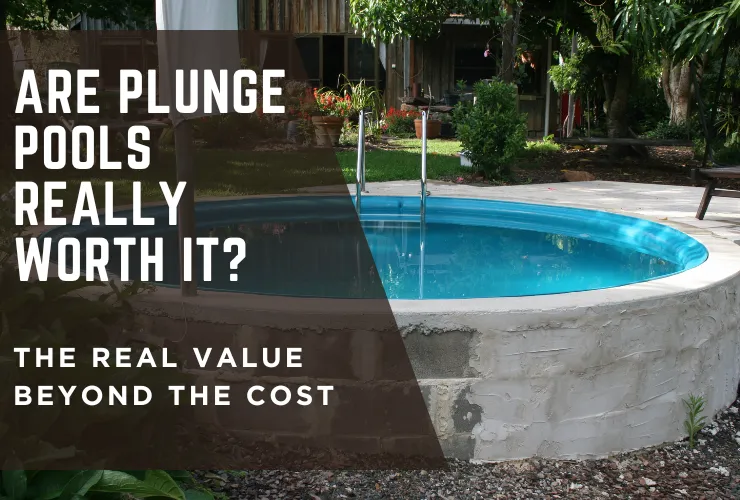
Are Plunge Pools Really Worth It? The Real Value Beyond the Cost
“Is a plunge pool worth it?” If you’re weighing the dream against the dollar, you’re not alone. Across Australia, backyard space is shrinking, summers are getting hotter, and families want a practical way to cool off without taking on an oversized project (or an oversized loan). That’s exactly where modern plunge pools shine—especially lightweight, factory-direct poly shells like the Aussie Plunge Pool™ that install fast and cost far less than most traditional options.
This guide unpacks the real value beyond the price tag—from lifestyle and wellness benefits to property appeal, running costs, and flexibility. By the end, you’ll know whether a plunge pool suits your home, your routine, and your budget—and how to make a smart, high-ROI choice.
What “Worth It” Really Means (Money + Lifestyle + Time)
When buyers ask “worth it?”, they’re really balancing three kinds of value:
Financial (purchase + install + running costs), Lifestyle (how often you’ll use and enjoy it), and Time (how long it takes to install and maintain).
A big reason plunge pools are surging in Australia is that they improve all three. Financially, a factory-direct poly shell often starts in the low thousands, not tens of thousands, and a smaller water volume means lower energy and chemical costs. Lifestyle-wise, a plunge pool isn’t a novelty—it’s a daily cool-down after work, a morning dip, or a Sunday stretch and float. And for time, a lightweight, one-piece shell can go from delivery to first swim in a weekend, not weeks.
Surprising Fact: Because plunge pools hold far less water than full-size pools, a compact heat pump can raise temperatures quickly and economically. Small volume = faster payoff in comfort.
Financial ROI: Lower Entry Price, Lower Ongoing Costs
Traditional pools stack costs: heavy shell or concrete, cranage, lengthy trades timelines, and weather delays. A modern poly plunge pool flips that script. Shell pricing is dramatically lower than fibreglass or concrete alternatives, and the install sequence is simpler—place, plumb, fill, balance.
Ongoing costs also tilt in your favour. A plunge pool’s smaller water volume requires fewer chemicals, less energy to heat, and a smaller pump/filter system. Add a thermal cover and you preserve heat overnight (and keep leaves out), cutting both energy and cleaning time. If you’re used to balking at pool running costs, a plunge pool reframes that conversation: minutes a week, not hours, and power costs in the “coffee-a-day” bracket when managed well.
Quick Gut-Check: If your family’s use case is to cool off, relax, or do short, low-impact exercises (not swim laps), you’re paying for exactly what you use—no wasted litres, no wasted courtyard.
Property Appeal: Small Space, Big Tick on the Listing
Will a plunge pool help with resale? In many markets, yes—if it’s done neatly. Buyers scan listings for tangible comfort and lower running costs. A tidy plunge pool with clean edging, privacy screening, and a quiet pump reads as a premium outdoor feature, without the intimidation of a full-sized pool’s upkeep.
For townhouses and compact blocks, an above-ground circular shell can be framed with a micro-deck, bench seating, and slim planters to look intentional and architectural. The visual is persuasive: private resort energy in a small footprint. On inspection day, mention simple, practical details—“tank-fed garden tap nearby”, “thermal cover included”, “quiet, efficient filter package”—so buyers see an easy-to-keep oasis, not a project.
Pro Tip:Keep the palette tight (two neutrals + one accent), add warm, indirect lighting, and you’ve elevated the entire backyard for evening viewings.
Wellness & Daily Rituals: The Value You Feel (Not Just See)
Beyond dollars, plunge pools score highly on wellbeing. A quick morning or after-work dip can reset mood and reduce stress in minutes. Families use them as a screen-free anchor—a place to connect, decompress, and cool off. Add a bubbler or gentle blade for sound and you’ve got a micro-sanctuary that drowns out neighbourhood noise.
Thermal flexibility magnifies wellness benefits. Cool immersion can reduce perceived heat stress on scorching days and, for many, delivers a mood lift. With a compact heater, you can flip the script in shoulder seasons—warm evening soaks extend swim months without heavy power draws. Pairing with a magnesium system is popular for skin feel and buoyancy; smaller volumes make the switchover simple and budget-friendly.
Unexpected Perk: Short dips are easier to fit into busy schedules than full swim sessions. That means higher real-world usage and more happiness per dollar.
Space Efficiency & Flexibility: Built for Aussie Yards
(and Renters)
If your yard is tight or has tricky access, a lightweight, one-piece poly shell is a game changer. Dry weights of roughly 125–250 kg mean many sites can do a trolley roll-in through a side return. Where that’s impossible, a brief hi-ab lift places the shell over a fence or roof quickly—no all-day cranage.
Space planning is forgiving: keep a 700–800 mm walking lane, wrap with a low bench to create seating and storage, add a privacy screen or plant wall, and you’ve turned a hard-to-use courtyard into a calm destination. For renters (check permissions, of course), a key benefit of an above-ground poly plunge pool is portability: drain, move, reinstall. You’re investing in something you can take with you.
Design Hint: Leaving the rim 200–400 mm proud above the deck creates a safe, natural seat edge and reduces carpentry costs.
Time to Swim: The “Weekend Install” Advantage
A full-size pool project can take weeks or months. A well-planned plunge pool install is more like a weekend with a clear checklist. Day 1: place on a compacted base, connect the matched Filter Package, run power to a weatherproof GPO. Day 2: fill, balance, fit the A-frame ladder, double-check your barrier gate latches and heights, and you’re ready for a careful first dip.
Because there’s no concrete cure time and far fewer interdependent trades, your risk of delays shrinks. If you’re “weekend-starved,” that speed does wonders—not just for momentum but for budget control. Less time on site = fewer chances for scope creep.
Reality Check: You’ll still follow your local safety rules (barrier, latch heights, inspection), but when the physical job is straightforward, compliance becomes a checklist rather than a saga.
Maintenance: Minutes, Not Chores
Small volume means quick vacuuming, short filter cycles, and faster heat response. A 10-minute weekly routine—empty skimmer basket, quick brush, check chemistry—is often enough to keep water polished. With a cover, you reduce evaporation and leaf load, making “set and forget” more realistic.
For chemistry, you’ve got options: magnesium, salt, or chlorine—choose based on skin feel and maintenance preference. Because the pool is small, trying magnesium becomes an affordable upgrade rather than a major conversion. And if you like simple automation, a timer on the pump and a smart plug for lighting or a low-flow bubbler give you the feel of a high-end system without high-end complexity.
Bottom Line: Less water, fewer leaves, shorter cycles—more living.
Common Misgivings—Answered Quickly
“A small pool won’t get used.” Most families discover the opposite. The easier it is to slip in for five minutes, the more often you’ll use it. A plunge pool fits daily life better than you expect.
“Maintenance is a hassle.”
It isn’t, when the volume is small and you keep a cover on. Think minutes per week, not hours. A matched Filter Package removes the guesswork.
“Access will be impossible.”
Lightweight shells are designed for tight sites. A trolley roll-in or brief hi-ab replaces day-long cranage. Plan the path (or lift point) and it’s done.
“Heated water costs a fortune.”
In a small volume, a compact heat pump paired with a cover is shockingly efficient compared to full-size pools. You’re heating litres you’ll actually use.
Quick Decision Framework (So You Don’t Overthink It)
* Primary use:cool-offs, family floats, short soaks → plunge pool delivers maximum value.
* Space:courtyard, terrace, or narrow side path → above-ground poly fits with minimal disruption.
* Budget:want a premium feel without five-figure shells → factory-direct poly wins.
* Timeline:prefer a weekend install versus weeks of site works → you’re the ideal candidate.
* Aesthetics:micro-deck + screen + warm lighting → resort look without resort price.
If you tick three or more, a plunge pool is almost certainly worth it for your household.
The Verdict: Yes—If You Optimise for How You Live
Are plunge pools worth it? For most Australian households chasing comfort, low running costs, and fast installs, the answer is yes—especially with a lightweight, factory-direct shell. You’re buying more swims per dollar, more calm per square metre, and more weekends back. That’s value you’ll feel every time the mercury spikes—or when the day has been long and you need five quiet minutes under the stars.
Ready to explore sizes and colours? Choose the footprint that fits your space ( 5000 / 7000 / 10,000 Litre), add the Filter Package, and line up your “Swim by Sunday” weekend. And don't forget, our friendly team is right on hand to answer any questions you may have- real humans right here in Australia ;)
